
Joint-by-Joint Approach: The Framework for a Resilient Body at Any Age
If your knees hurt and you’ve spent two years doing knee exercises, the problem may not be in your knees.

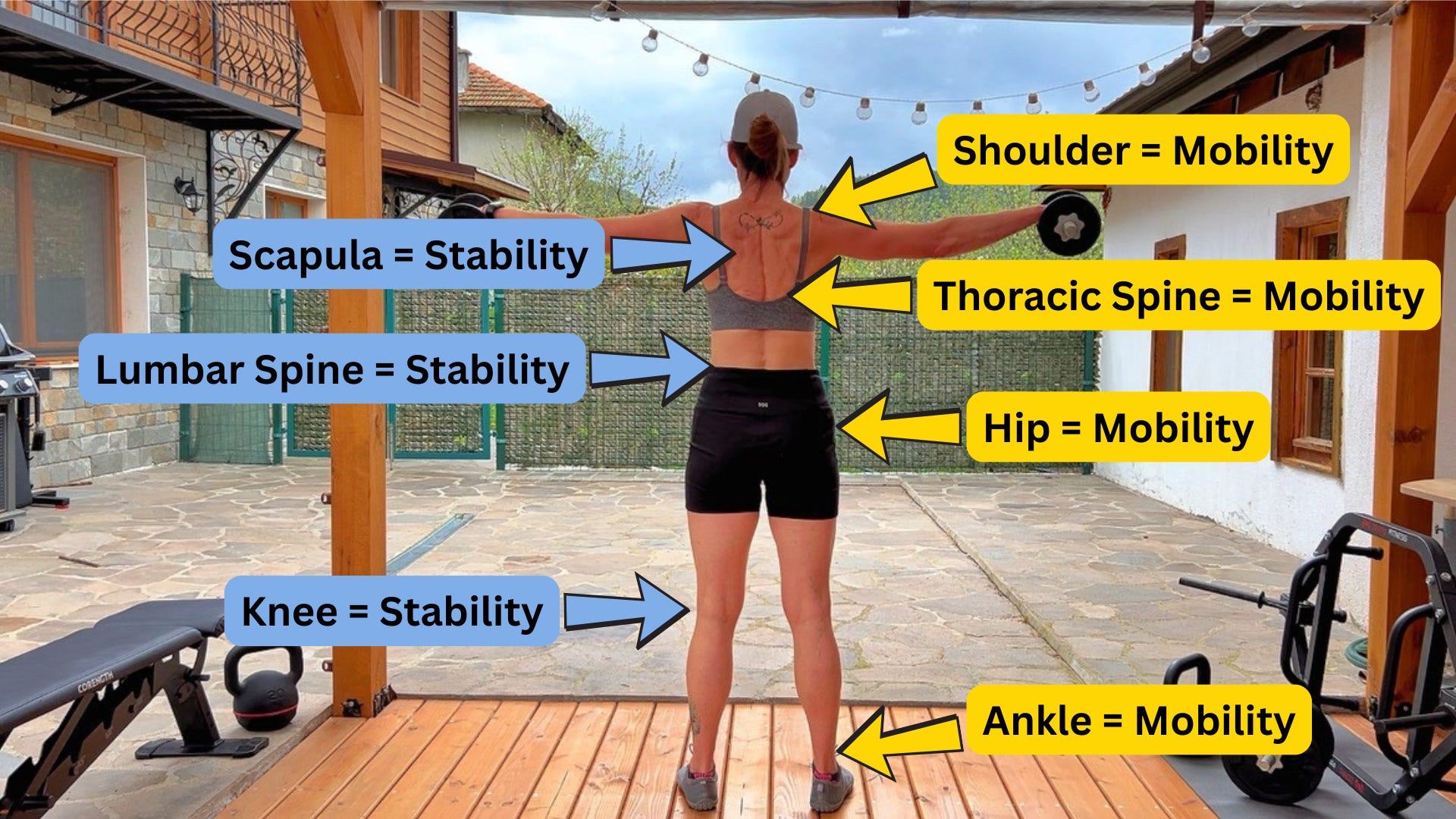
I've done this plenty of times. My low back starts nagging me a bit after I've been sitting too long, so I get up and do a bit of mobility—twist side to side, a couple of stretches. Feels better, and I get on with my day. That relief is real. It just doesn't last.
The joint-by-joint approach
When pain shows up in one area of the body, our focus naturally shifts there. But the fix we usually come up with rarely addresses the real cause. So the problem keeps coming back and, left unattended over time, may cause more serious injury. The point isn't relief. It's finding what's actually driving the problem in the first place. And this, at its core, is what the joint-by-joint approach is about.
The idea came out of a conversation between physical therapist Gray Cook and strength coach Mike Boyle about what the different joints actually need and how that should shape the way we train.
Our body is a stack of joints, each with predictable levels of dysfunction. The joint that hurts is rarely the problematic one. The real trouble is almost always one level away, in the joint above or below.
Mobility and stability alternate up the body
Starting at the ankle, below is a joint-by-joint overview of which joints need stability and which need mobility.
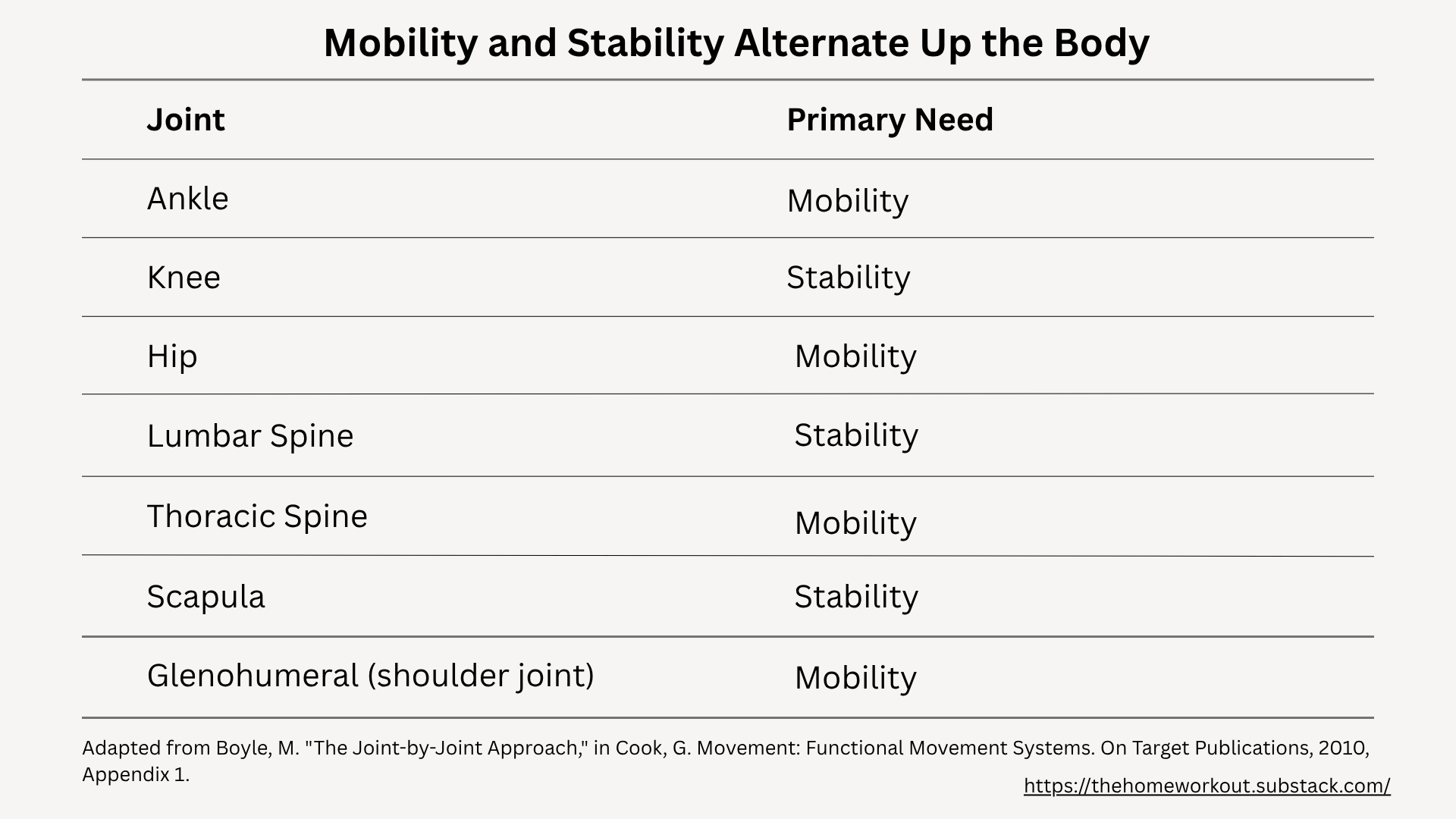
When a joint loses the ability to do its job, whether that job is movement or control, it pushes the work onto the joint next to it. Do that for enough years, and the neighboring region starts to hurt. Joints aren't interchangeable. Each one has a function, and those functions alternate as you move up the body.
One primary example is lower back pain. Developing sufficient core stability is often prescribed as fundamental muscle quality supporting the lumbar spine's stability needs. This is true, and it is important for improving the quality of spinal movement, but for a person with back pain, it leaves the problem hanging.
Mike Boyle explains this plainly (in Cook, Movement: Functional Movement Systems, 2010, p. 320):
Loss of function in the joint below—in the case of the lumbar spine, it’s the hips—seems to affect the joint or joints above. In other words, if the hips can’t move, the lumbar spine will. The problem is the hips are designed for mobility, and the lumbar spine for stability. When the intended mobile joint becomes immobile, the stable joint is forced to move as compensation, becoming less stable and subsequently painful.
So across the body, this can look like this:
Limited range of ankle mobility triggers knee pain
Stiffened hips hurt your low back
Less thoracic mobility leads to neck and shoulder pain, or low back pain
So fundamentally, what we should be looking for is identifying where the problem initiates within the chain and going after that first. And from a functional perspective, we tend to lose mobility before we lose stability.
So, let’s keep our hips happy
The hips sit in the middle of everything, and what they can't do gets passed to the low back and the knees. When we spend all day in a chair, we rob them of their full range. So it’s worth some real effort to keep them moving well.
Here are a few of my favorite ways to do that.
